
Minneapolis-St. Paul
Golden Valley Multi-Family
Some markets are cheap because they are broken. Golden Valley is disciplined because it is finished. This is a 207-unit, four-story Class A multifamily development seeking $7 million of preferred equity or bridge financing for a fully entitled infill parcel less than five miles from downtown Minneapolis that trades on a wholly different set of fundamentals than the urban core it neighbors. Where the metropolitan center absorbed a historic wave of new supply and now contends with softening incentives, Golden Valley has remained a fortress of scarcity; where the average renter negotiates concessions, the Golden Valley household commands one of the deepest income profiles in the Twin Cities.
The investment rests on a single structural fact that requires no forecast to verify: in this market, it now costs materially more to build an apartment than to buy one. Midrise construction runs $320,000 to $340,000 per unit while existing Class A product trades near $223,400. That inversion has stalled the merchant-development engine across the metropolitan area, and it is the surest protector of in-place rents and values that an owner of standing product can hold. This asset enters at a development basis of $293,746 per unit, beneath replacement cost, into a submarket that is physically built out, reserves fifteen percent of its land for parkland, and cannot manufacture the competing supply that would erode its rents.
The timing is not fortunate by accident; it is fortunate by design. Metropolitan deliveries fall to roughly 4,850 units in 2026, the slowest pace since 2019 and a decline exceeding fifty percent from the 2024 peak, while 2025 absorption of approximately 9,800 units outran deliveries by nearly two to one and drove vacancy into the low four percent range. The asset stabilizes into the thinnest competitive environment the market has offered in a decade, against suburban rent-growth forecasts of four to five percent through 2027 and a multifamily total-return outlook upgraded to 7.5 percent for the 2027 through 2030 window. Supply is receding precisely as demand deepens; that scissors is the engine of the return.

Community Summary
-
207 Units
-
4 Stories
-
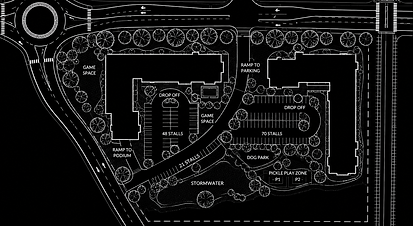
162 Underground Parking Spaces
-
Studios: 20
-
One Beds: 113 Units
-
Two Beds: 74 Units
-
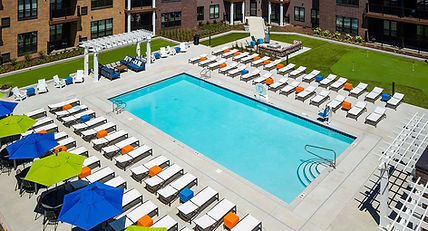
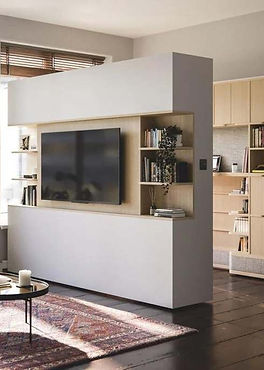
Resort Style Pool
-
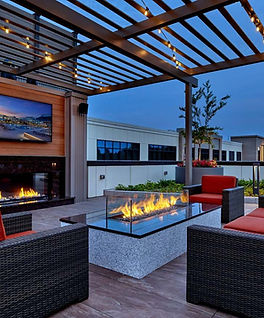
Outdoor Grilling Station
-
State of The Art Fitness Center
-
Community Room
-
Smart Package Room
-
Electric Car Charging Station
-
Concierge Platform
-
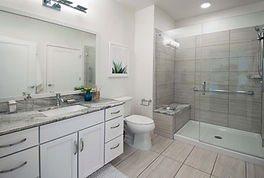
Smart Apartments
-
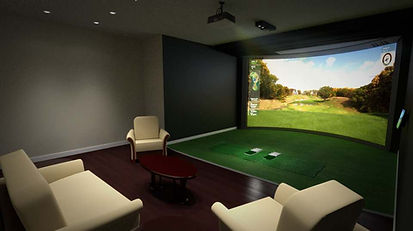
Golf Simulator
Demand, too, is verifiable rather than projected. Golden Valley carries a median household income near $108,800 and a prime-renter cohort income near $149,800, roughly twenty and sixty-six percent above the metropolitan benchmark, with half of its adults holding a bachelor's degree. Some 30,000 full-time jobs sit inside a city of 21,000 residents, the highest per-capita job density in the metropolitan area, anchored by the corporate headquarters of General Mills, Allianz Life, and Pentair within the Medical Alley life-sciences cluster. The daytime population swells by more than seventy-four percent as workers arrive each morning; in a jobs-rich node with more positions than residents, housing demand is not speculative, it is manufactured daily by the commute.
The rents, finally, are proven, not hoped for. Six of nine directly competitive Class A communities across the market clear the institutional $3.00 per square foot threshold, and Talo, the rifle-shot comparable in Golden Valley itself, the same city, the same product tier, the same renter, already achieves $3.15. The subject underwrites conservatively to $2.66. That eighteen percent gap between the underwriting and the demonstrated market is not the reach in this deal; it is the margin of safety, embedded and largely un-modeled, held entirely in reserve.


The Case in Four Movements
Scarcity is structural. A built-out city, and a metropolitan market where building costs $330,000 per unit against $223,000 trade prices, cannot readily produce new competing supply. The moat is the market itself.
Affluence is verified. A median household income near $108,800, a prime-renter cohort near $149,800, and fifty percent bachelor's attainment underwrite premium rents on durable, credentialed earning power rather than on a demographic projection.
Rents are proven. Six of nine comparables clear $3.00 per square foot; Talo, in-submarket, clears $3.15; the subject underwrites $2.66, an embedded runway exceeding eighteen percent that reads as conservatism, not ambition.
Timing is deliberate. The asset stabilizes into the thinnest pipeline since 2019 and an upgraded 7.5 percent total-return window, positioned to harvest scarcity rather than fight surplus.


The Thesis in a Sentence
Golden Valley is a supply-starved, high-income island inside a rebalancing metropolitan market, an asset created below replacement cost in a place that cannot build its own competition, underwritten beneath rents the market has already demonstrated it will pay.
Investment Summary
-
Total Project Cost: $60.8M
-
Equity: $11.7M
-
Bridge of PrefEq: $7M
-
Sr. LTC: 77%
-
Construction Debt: $47.3M
-
Construction Period: 17 mos
-
Stabilization: 15 mos
-
Stablized NOI: $3.9M
-
Cum. Debt Yield: 11.5%
-
Stabilized Yield on Coast: 6.42%
-
Stablized Value: $71M (5.5% CAP
-
Yr 4 Project IRR: 38% (underwritten)
-
$3 Rent psf NOI: $4.7M
-
$3 Rent psf IRR: 61%
-
$3 Rent psf Equity Multiple: 3.63x
-
$3 Rent psf Yield on Cost: 7.77%
11.5%
Cumulative Debt Yield
38%
Project IRR
7.77%
Yield on Cost